
Dental Insurance
How Much Is a Filling Without Insurance?

Even common dental operations might be intimidating if you don’t have dental insurance, particularly if you don’t know how much the total payment would be. “How much is a filling without insurance?” is one of the most frequently asked questions while dealing with cavities or tooth pain. In actuality, millions of Americans put off dental care every year because of financial worries, and fillings are among the most often delayed operations.
However, delaying or skipping a filling might result in much more serious problems down the road, such as infections, severe tooth decay, or the necessity for more involved (and costly) procedures like crowns or root canals. Knowing the cost of a filling without insurance enables you to plan financially before the issue worsens and make educated decisions about your oral health.
Based on publicly available dentist fee surveys and expert-backed dental resources, this guide will teach you all you need to know, from what really drives a filling’s pricing to actual average rates across the United States. This post clearly breaks down the figures and offers doable strategies to save money, even if you don’t have insurance, whether you’re currently dealing with a cavity or are just doing research for the future.
By the end of this article, you’ll have the confidence to take care of your dental health without needless stress since you’ll know what to anticipate, how to budget, and how to drastically reduce expenditures.

What Is Dental Filling?
It’s crucial to understand what a dental filling is and why dentists use it before learning how much one costs without insurance. Teeth that have been harmed by wear, decay, or small fractures can be restored with a dental filling. The dentist removes the tooth’s deteriorated section and “fills” the cavity with a long-lasting substance when microorganisms erode the tooth’s enamel. This preserves the tooth structure, stops more decay, and restores normal function.
When a cavity is found early enough to prevent more serious treatments like crowns, root canals, or extractions, dentists recommend dental fillings, which are among the most popular dental operations in the world. Major dentistry societies’ guidelines state that fillings are the first line of treatment for ensuring long-term oral health and keeping natural teeth.
Different Types of Dental Filling Materials
Prices vary when you don’t have insurance because different filling materials have varied advantages, durations, and expenses. The most prevalent kinds consist of:
- Amalgam (Silver) Fillings
- Made from a blend of metals like silver, tin, copper, and mercury.
- Known for durability—lasting 10–15 years or more.
- Typically the most affordable option.
- Used more often for back teeth due to their metallic appearance.
- Composite (White) Fillings
- Made from a tooth-colored resin material.
- Preferred for front teeth or visible areas because they blend naturally with the tooth.
- More technique-sensitive, usually more expensive than amalgam.
- Last around 7–10 years with good care.
- Ceramic or Porcelain Fillings
- Highly aesthetic and resistant to staining.
- Often used for larger cavities or when appearance is a priority.
- More expensive due to lab work and advanced materials.
- Gold Fillings
- Not as common today but extremely durable.
- Can last decades, but the cost is significantly higher.
- Requires multiple visits and custom fabrication.
When Do You Need a Filling?
A dentist may recommend a filling when you experience:
- Visible cavities or dark spots on a tooth
- Tooth sensitivity to sweets, hot or cold foods
- Pain when chewing
- Rough or chipped tooth surfaces
Regular dental examinations are crucial because cavities frequently don’t hurt in the early stages. Another reason it’s important to know the cost up front is that early discovery enables dentists to treat the issue swiftly and affordably.
You will be better prepared for the cost breakdown later in the article if you are aware of the types and purposes of fillings. Knowing the differences between each material’s price range enables you to select a solution that meets both your budget and your oral health requirements. This foundation lays the groundwork for determining what actually influences the cost in the absence of insurance.
What Factors Affect the Cost Of Filling Without Insurance?
Without insurance, the price of a dental filling can range from as little as $50 to well over $400, and patients are frequently confused by these disparities. In actuality, a number of important elements affect the price you will pay. Comprehending these cost drivers facilitates financial planning, prevents unforeseen fees, and enables you to make well-informed choices when contrasting various dental clinics.
The most crucial elements that affect filling costs when you don’t have dental insurance are listed below.
The Type Of Filling Materia
Without insurance, the price of a dental filling can vary greatly, mostly due to a number of important considerations. The kind of filler material utilized is one of the most important factors. Because of their materials, look, and procedure, composite (tooth-colored), ceramic, and gold fillings are more costly than amalgam (silver) fillings. The cavity’s size and severity also important; a smaller cavity requires less time and materials to repair, whereas a larger or deeper cavity necessitates more labor, increasing the total cost.
Location Of the Tooth
The tooth’s placement is another crucial consideration. While molars frequently cost more because they require more accuracy and work, front teeth may be simpler and less expensive to fill. Another factor is geography; fillings are typically more expensive in large cities and high-cost locations than in rural or low-cost places. Pricing is also influenced by the dentist’s experience; highly skilled dentists or experts usually charge more for their knowledge.
The tooth’s placement is another crucial consideration. While molars frequently cost more because they require more accuracy and work, front teeth may be simpler and less expensive to fill. Another factor is geography; fillings are typically more expensive in large cities and high-cost locations than in rural or low-cost places. Pricing is also influenced by the dentist’s experience; highly skilled dentists or experts usually charge more for their knowledge.
What’s The Cost of a Filling Without Insurance
One of the main worries if you don’t have dental insurance is how much a filling will truly cost. While prices vary depending on location, dentist experience, and materials utilized, most dental clinics follow similar nationwide pricing ranges. You can appropriately budget and avoid being taken aback when you receive a price if you are aware of these averages.
The cost of various fillings in the US is broken down in detail below.
Amalgam (Silver) Fillings
Amalgam fillings are the most affordable option because they are made from inexpensive metals and require less time to place.
Average cost without insurance:
- $50 to $150 for a single surface
- $120 to $250 for multiple surfaces
These fillings are commonly used for back teeth where appearance is less important but durability is key.
Composite (White/Tooth-Colored) Fillings
Because composite fillings employ sophisticated resin and require additional technique to attach firmly to the tooth, they are more expensive. For front teeth or places where aesthetics are important, they are favored.
Average cost without insurance:
- $90 to $250 for small to medium cavities
- $150 to $350 for larger restorations
Their natural look and growing popularity often make them the most commonly quoted option today.
Ceramic / Porcelain Fillings
Ceramic fillings, usually created in a dental lab, are more expensive because of their precision, strength, and stain resistance.
Average cost without insurance:
- $250 to $1,000+
These are often recommended for larger cavities or patients looking for long-lasting, aesthetically pleasing results.
Gold Fillings
Gold fillings are premium restorations and among the most expensive options. The material cost and custom fabrication push the price much higher than other types.
Average cost without insurance:
- $300 to $1,500+
Though costly, gold fillings can last decades and are considered one of the most durable materials in dentistry.
What Is the Typical Total Cost Of Filling Without Insurance?
While the range is wide, most uninsured adults pay:
- $100 to $400 for standard fillings, depending on material and cavity size
- $500 to $1,000+ when ceramic or gold fillings are used
For most patients who choose composite or amalgam fillings, a realistic expectation is: $150 to $300 total for one filling in many U.S. dental clinics.
The cost of materials, labor, equipment, and time are all factors in dentistry. Differences in pricing are caused by a number of factors, including regional administrative expenses, modern technology, and dentist experience. You can save a lot of money by comparing several clinics because there isn’t a single standard rate.
Read also: Does Insurance Cover Vasectomy?
Tips On How to Save Money on Fillings Without Insurance
It doesn’t have to be difficult to pay for a dental filling without insurance. Using dental discount plans or the in-house membership programs that many clinics provide is one of the simplest methods to save money.
These programs are perfect for those without insurance because they can cut filling costs by up to 60% and frequently begin the same day. Comparing costs across several dental practices is another useful tactic. Obtaining many quotations and requesting cash-payment discounts can greatly lower your overall price because costs can vary greatly.
Another excellent choice for reasonably priced care is dental schools. The cost is often 50–70% lower than private clinics because students carry out the treatments under expert supervision. Nonprofits and community health clinics can also assist by setting up free dental care events or providing sliding-scale pricing based on income.
Direct negotiation with your dentist is a very successful strategy that is frequently disregarded. For uninsured individuals, many clinics are ready to lower costs, particularly if you pay in full up ahead. Treatment costs can also be reduced by using a less expensive filling substance, such as amalgam. Additionally, most clinics offer payment plans or third-party financing solutions that let you spread the expense over a number of months if the total cost is still too costly to pay all at once.
You can obtain the dental care you require without postponing treatment or experiencing needless financial stress by looking into these choices.
What Are The Risk Associated with Skipping or Delaying Fillings
It can be tempting to put off getting a filling if you don’t have dental insurance, particularly if the cavity isn’t currently hurting. However, delaying care frequently results in more severe and costly dental issues. Cavities never heal on their own, and the more damage they do, the longer they go untreated. By being aware of these dangers, you may make more informed decisions and stop small health problems from becoming serious ones.
Your Cavity Continues To Grow and Spread
Tooth decay is a disorder that worsens over time. Your tooth’s enamel and dentin layers can be rapidly penetrated by damage that starts as a tiny spot. If treatment is not received, bacteria will continue to erode the tooth’s structure, enlarging the cavity and making it more challenging to fill. Eventually, a straightforward filling that could have cost $150 could become a lot more complicated—and expensive—procedure.
Increased Sensitivity and Pain
Many people believe they can wait since early cavities frequently cause little to no discomfort. However, when decay worsens, you may begin to feel discomfort while eating sweets, sensitivity to hot or cold meals, or pain when chewing. The decay is already moving toward your tooth’s deeper layers once pain starts.
Higher Risk of Infection or Abscess
An infection may result if decay gets to the pulp, which is the inner portion of the tooth that houses blood vessels and nerves. A tooth abscess, a very painful illness that can cause swelling, fever, and even spread infection to other parts of the body, could result from this. Antibiotics, a root canal, or in extreme situations, tooth extraction are usually needed to treat an abscess.
More Expensive Treatments Later
Skipping a filling today often means paying significantly more later. As decay worsens, you may require:
- Root canal therapy (commonly $800–$1,800)
- Dental crowns ($800–$2,000)
- Tooth extraction ($100–$500)
- Dental implants or bridges (thousands of dollars)
A cavity that once required a simple $150 filling can easily turn into a $1,500–$3,000 problem.
Damage to Surrounding Teeth
If decay is left untreated, it can spread to nearby teeth and raise the chance of developing additional cavities. Further dental issues can result from an infected tooth’s inflammation or strain on nearby structures.
Bad Breath and Oral Hygiene Problems
Bacteria that cause unpleasant flavors and persistent bad breath are frequently found in decaying teeth. Your confidence, social relationships, and general oral hygiene may all be impacted over time.
Structural Weakening and Tooth Fracture
The tooth gets weaker and more brittle as decay keeps eroding it. This makes fractures, chips, and cracks more likely. A crown or extraction are typically needed to fix a broken tooth, both of which are significantly more costly than a filling.
The goal of getting a filling early is to stop decay before it becomes a major medical and financial burden, not only to avoid pain. The most economical approach to keep your teeth healthy is to treat cavities as soon as possible, especially if you don’t have insurance. You can save hundreds or even thousands of dollars in the future with a fast visit and a straightforward filling today.
Read also:How Much Do Braces Cost Without Insurance?
What People Say on The Cost Of Filling With/Without Insurance
Bob Says:
“I just got quoted $995 per tooth to fill 2 cavities … Is this a normal price?”
Sam Says:
“it crazy one doctor can charge 500 for one filling and another can charge 200 … Is it possible to shop around for dental work?”
Chinedu Says:
“Ask for a cash discount and some dentists will give you one.”
Jonny Says:
“a community dental center … charged around $30 for the first visit … then … I found a bill of $291 … If they had mentioned … the total bill could be around $421 … I might need to spend an additional $1,000 for the root canal.”
Don Says:
“UF dental school … I was charged $70 for filling.”
Ben Says:
“Uninsured, I usually pay about $130 for a filling.”
FAQs On: How Much Is a Filling Without Insurance?
How much does a filling cost without insurance?
Most dental fillings cost between $100 and $500 per tooth if you don’t have insurance.
The size of the cavity, your location, and the kind of filling (composite, amalgam, or ceramic) all affect the ultimate cost. Cosmetic dentists may charge more than ordinary dentists, and urban locations typically charge more than rural ones.
Why are dental fillings so expensive without insurance?
Dentists and insurance companies bargain for lower rates.
The entire standard cost, which covers material prices, equipment, dental staff time, sterilization, X-rays, and overhead, is what you pay if you don’t have insurance.
This explains why, particularly in expensive locations, some internet users claim to have paid between $300 and $900 for a single filling.
Is it cheaper to get a filling at a dental school?
Yes, Regular dental clinics can charge 50–70% more than dentistry colleges.
For uninsured individuals, it’s a safer and more economical option because you’re treated by senior students under the supervision of professional dentists.
What type of filling is the cheapest?
Amalgam (silver) fillings typically cost between $75 to $150, making them the least expensive.
Because they take more time and expertise, composite resin (tooth-colored) fillings cost between $150 and $450.
How much does a composite (tooth-colored) filling cost without insurance?
A composite filling normally costs $150–$450 per tooth, depending on cavity size and clinic fees.
Because they require more intricate work, back molars are frequently more expensive than front teeth.
Can a dentist refuse treatment if I don’t have insurance?
No. Insurance is not necessary for dentists to treat you.
However, if you don’t have insurance, they could demand payment in full or in part up advance.
Do community clinics offer cheaper fillings?
Occasionally, but not always.
On the internet, many individuals claim to have been quoted between $80 and $200 at community health facilities, while others claim to have received unanticipated fees following treatment. Before moving forward, always request complete written estimates.
Is it cheaper to wait instead of getting the filling now?
No. Waiting can make the cavity grow, leading to:
- Root canal treatment ($800–$2,000)
- Crowns ($1,000–$2,500)
- Tooth loss and replacement costs ($2,000–$5,000)
A filling is almost always the cheapest option
What’s the average filling cost by state in the U.S.?
On average:
- Low-cost states (Texas, Ohio, Georgia): $120–$250
- Mid-cost states (Florida, Colorado, North Carolina): $150–$350
- High-cost states (California, New York, Washington): $250–$600
This varies by clinic, dentist experience, and city size.
Is it safe to get only temporary fillings to save money?
Fillings that are temporary are not a long-term fix. Usually lasting three to six months, they may fall out and exacerbate the cavity. Use this method only as a temporary solution and only if a dentist recommends it.
Can I get a filling done abroad for cheaper?
Yes, fillings are available for $30 to $80 in nations like Mexico, Thailand, and Turkey.
Travel expenses, variations in dental license, and restrictions on follow-up should be taken into account, nevertheless.
How do I know if a dentist is overcharging me?
Red flags include:
- No written treatment plan
- Refusing to explain costs
- Prices far above local averages
- Urging unnecessary upgrades (ceramic fillings, crowns)
To protect yourself, get 2–3 price quotes before treatment.
Conclusion
It is essential to know how much a dental filling without insurance will cost in order to make plans and prevent unpleasant surprises. Prices range from $50 for basic amalgam fillings to over $1,000 for more expensive options like gold or porcelain, depending on the filling material, cavity size, tooth position, and dentist experience. Even while fillings might appear expensive, postponing treatment might result in much higher costs for extractions, crowns, or root canals.
Fortunately, dental discount plans, community clinics, dentistry colleges, negotiating cash payments, and financing choices are solutions for uninsured consumers to cut costs. Early intervention not only protects your natural teeth but also avoids more severe oral health issues and financial strain. You may keep your teeth healthy without going over budget by being aware of costs and looking into reasonably priced choices.
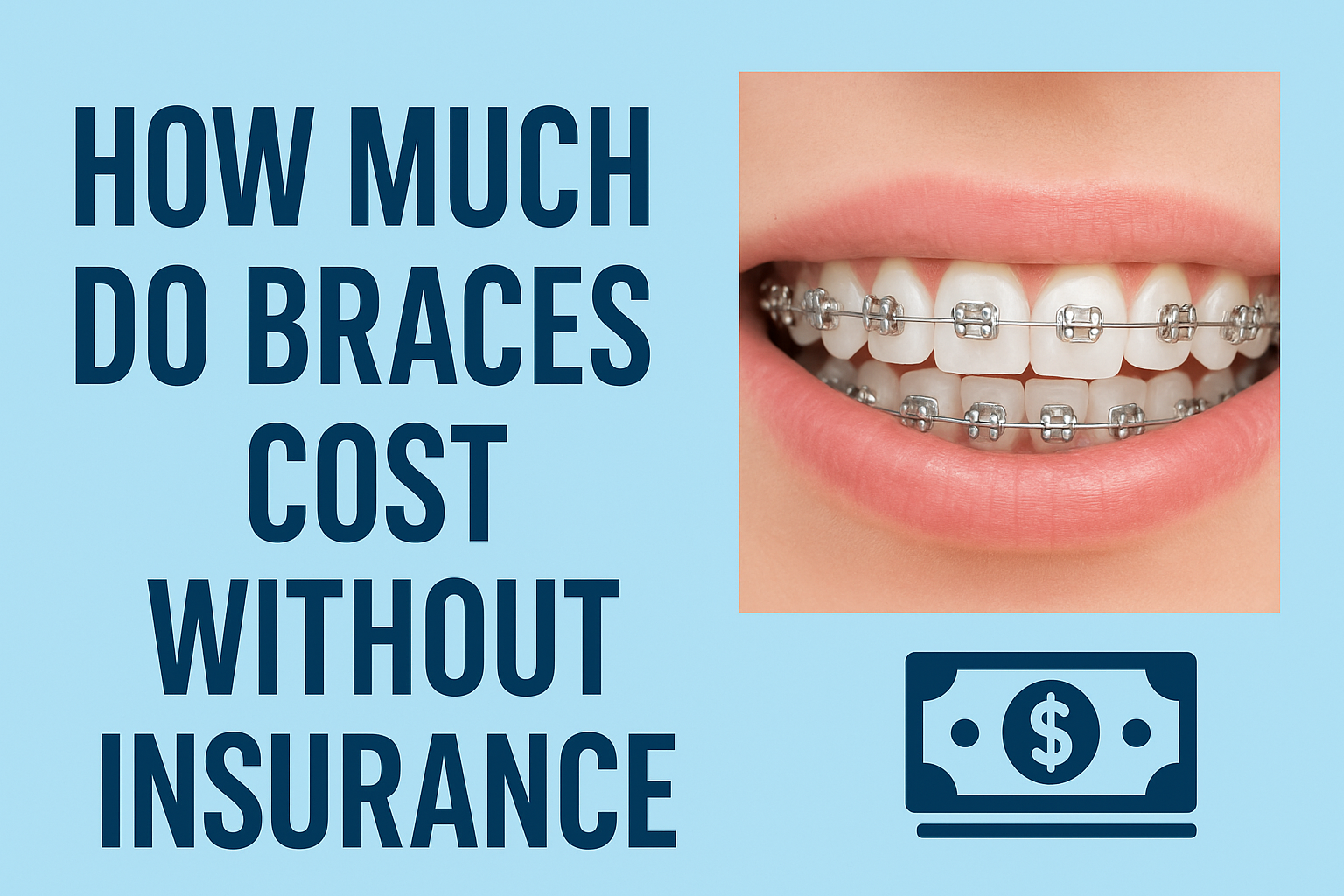
People frequently notice your lovely smile right away since it exudes warmth, confidence, and good health. However, millions of people may experience self-consciousness rather than pride when they smile due to tooth misalignment, crowding, or bite problems. Braces can help with that. In addition to improving looks, orthodontic therapy enhances speech, jaw alignment, and oral hygiene. But the big question is: How much do braces cost without insurance? We shall give answer to this question in the course of this article.
Braces are a very successful option, but there is a big drawback: they are expensive. The issue for many adults and families is not whether braces are worthwhile, but rather how to pay for them, particularly if you don’t have dental insurance. The cost of braces, which can range from a few thousand to over ten thousand dollars depending on the type and intricacy of treatment, can seem prohibitive if you don’t have insurance.
This thorough guide will explain how much braces cost without insurance, examine the reasons behind pricing differences, and offer clever strategies to cut costs without sacrificing high-quality care. Additionally, you’ll learn about several brace options, like as invisible aligners like Invisalign and conventional metal brackets, and choose which one could best suit your dental needs and budget.
This guide will assist you in making an informed and confident choice regarding your brace’s investment, whether you are an adult who is finally ready to correct your smile or a parent preparing orthodontic treatment for your child.

How Much Do Braces Cost Without Insurance
Without insurance, the whole $3,000 to $12,000 cost of your braces—which includes pre-treatment testing, materials, installation, and follow-up appointments—is your responsibility. The bright side is that you can deduct your dental healthcare costs from your taxes, so keep track of those receipts! They will be useful when tax season arrives.
Unfortunately, you have to wait until tax season to get that tax deduction, which only offers a small benefit. Braces may still seem too costly, but don’t worry—we’ll look at a few ways to lower the cost so you won’t have to put them off.
How Much Do Braces Cost with Insurance?
Many consumers are still perplexed by how dental insurance operates after looking at their coverage. Braces will only be covered by your health insurance if they are medically required. Health insurance companies frequently fail to acknowledge that dental issues can result from any kind of tooth misalignment and only cover the most severe occurrences.
Complex algorithms are used by health insurance companies to assess whether a surgery is elective or medically necessary. There are a few ways you can still have to pay for braces out of cash before or after your insurance comes in, which can be confusing. Typical out-of-pocket expenses include:
- Premiums
This is the monthly premium for your dental insurance, which can be deducted from your paycheck or paid directly. Therefore, even if your braces are covered, you still have to pay for that coverage.
- Deductible
Before your coverage begins, many insurance companies demand that you pay a particular sum. This is known as your deductible, and dental insurance deductibles often range from $50 to $100.
- Annual Maximums
The greatest amount your insurance company will cover for dental care in a single year is known as the annual maximum benefit. Typically, annual maximums fall between $1,000 and $2,000.
- Copays
You have to pay these costs each time you visit. The copay for appointments to specialists, like orthodontists, may be more than that of visits to your general practitioner. The cost of copay varies by plan and provider.
- Exclusions
Certain conditions may not be covered by your dental plan. Certain dental plans may refuse coverage due to pre-existing conditions, even if it is against the law for health insurance companies to do so.
Even though insurance can make braces cheaper, you might still have to pay hundreds or even thousands of dollars for braces after accounting for all these potential expenses.
Why Are Braces Important?
In addition to straightening your teeth, braces can enhance your general well-being. Brushing and flossing become easier as orthodontic treatment aligns your teeth correctly, reducing your risk of gum disease and tooth decay. Additionally, when your bite gets better, pressure during normal function can be transferred more uniformly across the teeth, reducing the risk of tooth fracture and relieving strain on the jaws and facial muscles.
Prevent Gum Disease
You’ve probably heard about gum disease and are making every effort to stay away from it. Reducing the chance of gum disease is one of braces’ many long-term advantages. The hallmark of gum disease is inflammation, which is frequently brought on by bad oral hygiene practices that result in the accumulation of bacterial plaque on teeth.
Teeth that are misaligned are more likely to hold onto food particles and bacterial plaque, which over time can lead to gum disease and a number of other health problems. Braces can help you straighten your teeth and improve the efficiency and ease of cleaning and flossing your teeth.
Reduce Cavities
Additionally, braces can reduce your chance of getting cavities. Cavities, or tooth decay, are caused by oral bacteria that feed on the sweets we eat. These bacteria then make toxic acids that erode your tooth enamel. Bacteria are more likely to stay on your teeth in difficult-to-reach places when teeth overlap or are misaligned, making cleaning, brushing, and flossing more difficult.
Better Digestion
In addition to improving the appearance of your smile, teeth aid in the chewing of your favorite foods. Inadequate biting and misaligned teeth can make it difficult to digest food, which can lead to digestive problems and inflammation. You can enhance your digestion and get a healthy bite with braces.
Fix Bad Bite
Ineffective chewing, jaw strain, broken teeth, and numerous other dental issues can result from an incorrect bite. In order to maintain optimal tooth function, braces can help place your teeth in the right locations.
Prevent Bone Erosion
The bone surrounding your teeth may degenerate if your teeth are not properly aligned. This is frequently caused by excessive force on the teeth and dangerous oral bacteria linked to gum disease. By repositioning the teeth, braces can help stop bone deterioration.
Factors That Affect Cost Of Braces
If you’ve ever compared the costs of braces at several clinics, you’ve undoubtedly noticed that they can differ significantly, often by thousands of dollars. This is due to the fact that there is no one-size-fits-all price for braces without insurance. Regional, clinical, and individual factors all play a role. You may make better plans and steer clear of unpleasant shocks during treatment if you know what influences the cost. The following usually affect the cost of braces:
The Types Of Braces
Traditional metal braces and clear, tooth-colored brackets are the two primary kinds of braces. The most popular kind of braces for straightening teeth are made of metal. Because they are less apparent than metal brackets, clear or tooth-colored brackets can improve the appearance of your smile. The cost of treatment can be significantly impacted by the type of braces you select.
Severity Of the Dental Problem
Your procedure will probably be less expensive and take less time if your teeth simply require minor changes. However, your orthodontist may need more appointments, adjustments, or even extra appliances if you have significant crowding, bite issues, or jaw misalignment, all of which raise the expense.
Duration Of Treatment
The average duration of orthodontic treatment is 12 to 36 months. You will spend more for examinations, upkeep, and modifications the longer your braces are in place. The overall cost will inevitably rise for treatments that call for more frequent visits or longer wear times.
Orthodontist’s Experience and Reputation
A general dentist may charge less for braces than an orthodontist with years of specialized training or advanced certifications. However, paying for expertise frequently translates in better long-term outcomes, fewer difficulties, and quicker results, all of which can ultimately save you money.
Additional Procedures
Extra procedures, including as X-rays, teeth extractions, cleaning, or retainers, may occasionally be necessary before or after braces are installed. Asking your orthodontist for a complete cost breakdown before starting treatment is crucial because these extra procedures aren’t typically covered by the initial price.
Clinic Type
Dental colleges or community dental centers may charge lower prices than private orthodontic clinics. Nonetheless, dental colleges frequently provide affordable procedures overseen by certified specialists; this is a fantastic choice if you’re looking to cut costs without insurance.
Types Of Braces and Their Average Cost
One of the most important decisions you’ll make while getting braces is what kind to utilize. Every alternative has a different price range, style, degree of comfort, and upkeep requirements. You can make the best decision between cost, efficacy, and aesthetics by being aware of these variations, particularly if you’re paying out-of-pocket without insurance. The most popular brace kinds and their average costs are broken down here.
- Metal Braces
Average Cost Without Insurance: $3,000 – $7,500
The most conventional and popular kind of orthodontic therapy is metal braces. They are made of premium stainless steel and progressively realign your teeth using metal brackets and wires.
Pros:
- It’s usually the most affordable option
- Extremely effective for complex alignment and bite issues
- Durable and reliable
Cons:
- Highly visible on the teeth
- Can cause minor mouth irritation
- Some dietary restrictions (avoid sticky or hard foods)
Best For: Teens and adults seeking the most cost-effective and proven method.
- Ceramic Braces
Average Cost Without Insurance: $4,000 – $8,500
Similar to metal braces, ceramic braces employ clear or tooth-colored brackets that complement your natural teeth. They are therefore a more aesthetically pleasing option, particularly for people seeking a less conspicuous procedure.
Pros:
- More discreet and visually appealing
- Effective for most alignment problems
- Suitable for professional or social settings
Cons:
- Slightly more expensive than metal braces
- Brackets can stain without proper care
- More fragile, which may extend treatment time
Best For: Adults or older teens who want an aesthetic yet effective alternative to metal braces.
- Lingual Braces
Average Cost Without Insurance: $6,000 – $12,000
Lingual braces are completely hidden from view because they are affixed to the back of your teeth, or the side that faces your tongue. They are more expensive because they are produced specifically for each patient.
Pros:
- Virtually invisible
- Highly customized for a precise fit
- Works well for complex cases
Cons:
- Among the most expensive options
- Can initially affect speech and tongue comfort
- Harder to clean and maintain
Best For: Adults or professionals who want completely invisible braces and are comfortable with a higher price.
- Invisalign (Clear Aligners)
Average Cost Without Insurance: $3,000 – $8,000
Custom-fitting, detachable plastic trays are used by Invisalign and other transparent aligner companies (such as Byte or SmileDirectClub) to gently move your teeth. As your teeth move, you usually replace your aligner every one to two weeks.
Pros:
- Practically invisible and removable
- Comfortable, smooth material with no brackets or wires
- Easy to clean teeth and eat normally
Cons:
- Requires discipline — aligners must be worn 20–22 hours daily
- Not ideal for severe bite or rotation issues
- Can be more expensive depending on treatment length
Best For: Adults and teens who prefer a discreet, flexible, and lifestyle-friendly solution.
- Self-Ligating Braces (Optional)
Average Cost Without Insurance: $4,000 – $7,800
Self-ligating braces resemble metal or ceramic braces in appearance, but the wire is held in place by integrated clips rather than elastic bands. This design may cut treatment times and lessen friction.
Pros:
- Requires fewer orthodontic visits
- Easier to clean and maintain
- Potentially faster alignment process
Cons:
- Still visible (unless ceramic version used)
- Slightly more expensive than traditional braces
Best For: Patients seeking faster treatment and fewer appointments without switching to clear aligners.
Braces Cost for Adults vs Teenagers
Age has a surprisingly significant impact on the overall cost of orthodontic treatment. Braces are beneficial for both adults and teenagers, although they can be more costly for adults than for younger patients due to a number of reasons, including bone density, treatment complexity, and lifestyle preferences.
Why adult braces are usually more expensive
Compared to youth, adults frequently deal with more complex orthodontic problems. Teenagers’ jaws and teeth are still growing, so realigning them is simpler and quicker. Adult bones, on the other hand, are fully formed, which slows down tooth movement and occasionally necessitates extractions or jaw realignment.
Other factors that increase adult costs include:
- Longer treatment duration: Braces are usually required for 18–36 months for adults and 12–24 months for teenagers.
- Higher aesthetic demands: Even both ceramic braces and Invisalign are more costly than typical metal braces, adults frequently favor more discrete choices.
- Additional dental work: Before or after braces, adults may require pre-treatment procedures including fillings, gum treatments, or teeth whitening.
Adults vs. Teens Braces Cost Comparison
| Type of Braces | Teens Average Cost | Adult Average Cost |
| Metal Braces | $3,000 – $6,500 | $4,000 – $7,500 |
| Ceramic Braces | $4,000 – $7,500 | $4,500 – $8,500 |
| Lingual Braces | $6,000 – $10,000 | $7,000 – $12,000 |
| Invisalign / Clear Aligners | $3,000 – $7,000 | $3,500 – $8,000 |
Due to longer and more complicated therapy requirements, adults typically pay $500 to $1,500 more for the same sort of treatment, as shown above.
Why Teens Sometimes Pay Less
Teenagers may benefit from:
- Shorter treatment times, thanks to more flexible bones.
- Special orthodontic discounts, as many clinics offer teen-friendly packages.
- Fewer pre-treatment needs, since younger patients usually have healthier teeth and gums.
How To Save Money on Braces
Braces can be very expensive, particularly if you have to pay for them fully out of yourself. Fortunately, there are a number of clever strategies to reduce orthodontic costs without sacrificing the standard of your treatment. These techniques can lower the cost of braces even if you don’t have dental insurance, whether you’re an adult paying for yourself or a parent setting down money for your child.
Compare Quotes from Multiple Orthodontist
Don’t accept the first consultation you schedule. From orthodontist to orthodontist, the same treatment plan can differ by thousands of dollars.
Make appointments for free or inexpensive consultations with two or three orthodontists, evaluate treatment options, and request complete cost breakdowns that include any additional or hidden costs. For less money, you may frequently get care of comparable quality.
Choose the Most Cost-Effective Type of Braces
For the majority of alignment problems, metal braces are still the most affordable choice. Compared to ceramic or lingual braces, you could save $1,000 to $3,000 if appearance isn’t your primary concern. Talk to your orthodontist about whether you can get the same outcomes with a simpler type.
Consider Dental Schools
Braces and orthodontic procedures are sometimes 40–60% less expensive at dentistry schools than at private clinics. Students administer treatments under the guidance of certified orthodontists, guaranteeing professional supervision and safety. For anyone on a limited budget, it’s a great choice.
Use Payment Plans or Financing
The majority of orthodontists provide monthly installment plans with little to no interest because they recognize how expensive braces may be. Inquire about third-party payment options like CareCredit or internal financing at your facility. It can be much simpler to manage therapy if the payments are spread out over a period of 12 to 36 months.
Join a Dental Discount Plan
Dental discount schemes can provide 10–60% savings on orthodontic services, but they are not insurance. You can access a network of cooperating orthodontists who agree to lower charges for a nominal annual fee.
Maintain Good Oral Hygiene
Although it may seem straightforward, practicing good dental hygiene while receiving treatment helps avoid damage that can necessitate repairs or prolong treatment, both of which can result in additional costs. To save needless costs, adhere to the care guidelines provided by your orthodontist.
How To Pay For Braces Without Insurance
The idea of spending thousands of dollars on braces can be frightening if you don’t have dental insurance. Fortunately, orthodontic care can be affordable even in the absence of typical coverage thanks to a number of flexible payment choices and financial resources. You can choose a solution that meets your treatment needs and budget by looking through the options listed below.
- Payment Plans Offered by Orthodontists
The majority of orthodontic clinics provide in-house payment options since they recognize that braces are a substantial commitment.
These plans typically allow you to:
- Spread the total cost over 12 to 36 months
- Pay little or no interest
- Avoid large upfront payments
Find out if your orthodontist offers automatic monthly deductions or personalized payment plans. This makes it simpler to control your spending without incurring debt.
- Health Savings Accounts (HSA) or Flexible Spending Accounts (FSA)
You can use these pre-tax savings to pay for orthodontic costs if your company offers an HSA or FSA. Here’s how it helps:
- You save money because you’re using tax-free income.
- Both braces and aligners qualify as eligible medical expenses.
Examine the guidelines in your plan; some may call for pre-approval or evidence from your orthodontist prior to starting treatment.
- Dental Discount Plans
For people without insurance, dental discount plans are a fantastic option. You pay an annual membership fee (often between $80 and $200) and receive discounted prices from participating orthodontists in lieu of monthly payments.
Depending on the provider and area, these programs can save you between 10% and 60% on braces and related treatments.
Popular examples include:
- Careington Dental Discount Plan
- Aetna Dental Access
- Cigna Dental Savings
They can significantly reduce your out-of-pocket expenses even if they are not insurance.
Financing Options and Dental Credit Cards
A lot of orthodontic offices collaborate with outside lenders such as CareCredit, LendingClub, or Scratchpay. You can pay for your braces in reduced monthly installments thanks to these providers’ medical credit lines.
If you pay off the bill within a certain amount of time, some plans even offer 0% interest periods.
Read the fine print carefully because late or missed payments could result in higher interest rates.
- Low-Income or Nonprofit Assistance Programs
You or your child may be eligible for community or nonprofit assistance programs that partially or fully reimburse orthodontic costs if your income qualifies. Some notable programs include:
- Smiles Change Lives – Provides affordable braces for children from low-income families.
- Smile for a Lifetime Foundation – Offers free orthodontic treatment for kids who meet eligibility criteria.
- Local dental schools or community clinics – Often provide reduced-cost treatments supervised by licensed professionals.
These programs can save you a lot of money, but they might need an application, evidence of income, or a waiting time.
- Using Tax Deductions
If the cost of orthodontic treatment exceeds a specific proportion of your annual income (as defined by local tax rules), it may be partially tax deductible. Maintain thorough records of all payments, receipts, and associated costs, and get advice from a tax expert.
Frequently Asked Questions On: How Much Do Braces Cost Without Insurance
Are braces cheaper if paid upfront?
Yes, as many orthodontists give a discount for a lump sum payment, braces are frequently less expensive if paid for up front. This is done to encourage patients to finish the financial contract up front, saving the clinic money on administrative expenses and the hassle of monitoring payments over time.
Although the amount of the discount varies depending on the practice, it typically ranges from a few percent (e.g., 3%) to possibly 10% or more, which results in significant savings on the total cost of treatment.
Can I get free braces without insurance?
Although totally free braces are uncommon without insurance, you can obtain them through nonprofit programs for low-income families or drastically cut costs by utilizing payment plans, selecting more reasonably priced choices, and taking advantage of discounts. Additionally, you can pay for the therapy tax-free with a Health Savings Account (HSA) or Flexible Spending Account (FSA).
What happens if I can’t finish payments?
If you are unable to make your payments, you may be subject to a number of repercussions that will worsen over time. These include late fees and interest charges, which may result in serious harm to your credit score, debt collection, legal action, and asset confiscation.
The precise consequences are determined by the terms of your contract, local law, and the type of debt (secured vs. unsecured).
How long do braces last?
The usual duration of braces therapy is between 18 and 24 months, though this can vary greatly according on how serious the orthodontic problems are. While more complicated issues may take up to three years or longer, mild situations may take as little as six to twelve months. The timeline is also influenced by variables such as age, the particular oral issues, and the patient’s compliance with treatment guidelines.
Is Invisalign cheaper than braces?
No, Invisalign is typically more expensive than traditional braces; however, the total cost will vary according on your particular orthodontist, the type of braces, and the intricacy of your case. Invisalign is frequently more expensive up front because of things like enhanced customisation, whereas braces usually have a lower initial cost.
Can Medicaid or government programs cover part of it?
Yes, medical expenses can be covered by government programs like Medicaid and CHIP; the exact coverage will depend on your eligibility, geography, and income. While the Children’s Health Insurance Program (CHIP) offers low-cost health care for children and pregnant women, Medicaid is a joint federal and state program for low-income people. Additionally, some states increase the number of persons covered by Medicaid.
Conclusion
Although getting braces without insurance may initially appear costly, it’s a long-term investment in your smile, confidence, and overall health. The type of braces, the intricacy of your treatment, and your location all affect the final cost, but with careful planning, it’s completely doable.
You may drastically cut costs while still getting high-quality orthodontic treatment by looking into payment plans, dental discount programs, and reasonably priced clinics. Recall that better dental health and enduring confidence are more important than straight teeth.
Prior to beginning treatment, weigh your alternatives, ask questions, and select a plan that best suits your budget and dental needs. A gorgeous, healthy smile is always worthwhile, and even without insurance, it may be attained with the correct strategy.
-

 Auto Insurance11 months ago
Can I insure a Car Not In My Name?
-

 Auto Insurance11 months ago
How Much Is Gap Insurance?
-

 Dental Insurance11 months ago
How Much Do Braces Cost Without Insurance?
-

 Health Insurance11 months ago
Does Insurance Cover Vasectomy?
-
Auto Insurance11 months ago
How Much Is Tesla Insurance?